Large Part Injection Molding: How a Large Tonnage Contract Molder Manufacturer Delivers Precision at Scale
Manufacturing large plastic components is an entirely different discipline from standard injection molding. The physics change. The engineering requirements multiply. And the margin for error shrinks considerably — because any defect in a large, complex part carries a far greater consequence than the same defect in a small one. When procurement teams and product engineers are sourcing a partner for oversized plastic components, they are not simply looking for a machine with a big platen. They are looking for a large tonnage contract molder manufacturer with the process knowledge, tooling capability, and quality infrastructure to deliver parts that perform exactly as designed, at volume, every time.
At Jiangzhi (swcpu.com), our large part injection molding service is built on over 40 years of precision manufacturing experience, high-tonnage press capacity up to 1,100 tons, and a fully integrated mold workshop that handles everything from tooling design to final part inspection — in house, under one roof, with full process accountability.
What Is Large Part Injection Molding and What Makes It Uniquely Challenging?
Large part injection molding is the process of producing oversized plastic components by injecting molten thermoplastic resin into a precision-engineered mold cavity under high clamping force and controlled pressure. At Jiangzhi, our equipment supports parts up to 2,000mm x 1,500mm in footprint — a size range that places unique demands on every aspect of the manufacturing process, from material flow dynamics to tooling design and post-mold handling.
What separates large part molding from standard-scale injection molding is not just the size of the machine — it is the set of engineering challenges that scale with part geometry. Three issues dominate the discipline:
Material flow and fill uniformity. When molten plastic must travel long distances from the gate to the far reaches of a large cavity, pressure drop accumulates, melt temperature falls unevenly, and the risk of incomplete fill or short shots rises sharply. Gate placement, runner system design, and injection speed profiles must all be carefully engineered to maintain uniform cavity fill across the entire part footprint.
Differential shrinkage and warpage. As a large plastic part cools, sections with different wall thicknesses cool at different rates. Semi-crystalline materials such as polypropylene and nylon can shrink between 1.5% and 3.0%, and direction-dependent shrinkage creates asymmetric stress distributions that cause parts to bow, twist, or warp after ejection. Research consistently shows that temperature differentials as small as 5–10°C across a mold cavity are sufficient to produce measurable warpage in large flat parts. Managing this requires uniformly designed cooling channels, balanced wall thicknesses, and process parameters tuned to the specific resin.
Clamping force requirements. The larger the projected area of the part, the greater the internal cavity pressure that must be countered to keep the mold closed during injection. Insufficient clamping force allows the mold parting line to open under pressure, causing flash, dimensional inaccuracy, and potential mold damage. At Jiangzhi, our 1,100-ton press capacity provides the clamping force margin needed to produce large-footprint components cleanly and consistently.
How Jiangzhi Approaches Large Part Mold Design and Tooling
As a precision large tonnage molding provider, Jiangzhi treats mold design as the single most consequential step in any large part project. The quality of a molded part is largely determined before a gram of material is processed — by the decisions made in the tooling design phase. Our in-house mold workshop is equipped with CNC machining centers, EDM (Electrical Discharge Machining) equipment, and precision surface grinding machines, giving our engineering team complete control over every aspect of large mold fabrication.
For large part tooling, our mold design engineers focus on five critical areas:
- Cooling channel layout — Conformal and optimized straight-drilled cooling channels are positioned to achieve uniform heat extraction across the full cavity surface. Uneven cooling is the primary driver of warpage in large parts, and our tooling team runs thermal simulation to validate channel placement before any steel is cut
- Gate strategy — Multiple gate locations, fan gates, or hot runner manifolds are used where necessary to ensure balanced fill and minimize pressure drop over long flow paths. Gate positioning is determined by mold flow analysis, targeting a fill pattern that produces consistent shrinkage across the entire part
- Wall thickness optimization — DFM (Design for Manufacturability) review identifies areas of non-uniform wall thickness in the customer’s design and recommends corrections that prevent differential cooling, sink marks, and internal stress
- Draft angle verification — Large parts have greater projected surface area in contact with the mold cavity, meaning that inadequate draft angles generate significant ejection friction. Our engineers verify and recommend draft angles appropriate to the part geometry and surface finish specification
- Mold structural reinforcement — Large molds experience considerable mechanical stress during each injection cycle. Mold bases, support pillars, and interlocking cavity blocks are engineered to maintain dimensional stability across the mold’s service life
Molds are manufactured from tool steel, stainless steel, or aluminum depending on the production volume and part requirements. Mold life at Jiangzhi is effectively unlimited — worn tooling is replaced and molds are stored indefinitely, protecting our clients’ tooling investment throughout the product lifecycle. Standard mold lead time for large part tooling is 30 to 40 days, with first article samples provided for customer approval before production commences.
Materials Suited to Large Part Injection Molding and How to Choose Wisely
Material selection for large injection-molded parts requires a more deliberate evaluation than for small components, because material behavior — particularly shrinkage rate, melt viscosity, and thermal stability — has a proportionally greater impact as part size increases. Jiangzhi’s engineering team provides material guidance as part of every project review, helping clients select resins that are appropriate for both the part’s functional requirements and the demands of the molding process itself.
Commonly used materials in our large part injection molding service include:
- Polypropylene (PP) — Lightweight, chemically resistant, and cost-effective for high-volume large parts such as containers, housings, and panels. PP has a relatively high shrinkage rate (1.5–2.0%) and benefits from carefully balanced cooling to control warpage
- High-Density Polyethylene (HDPE) — Excellent impact resistance and chemical compatibility, widely used for industrial containers, pipe fittings, and structural casing components
- ABS (Acrylonitrile Butadiene Styrene) — Good dimensional stability, impact resistance, and surface finish quality. A lower shrinkage rate (0.4–0.8%) makes ABS more forgiving in large flat geometries prone to warpage
- Polycarbonate (PC) — Outstanding toughness and optical clarity for large protective covers, machine guards, and transparent structural panels. PC benefits from controlled mold temperature and drying to prevent hydrolytic degradation
- Nylon (PA6 / PA66) — High mechanical strength and thermal resistance for structurally loaded large parts. Moisture absorption must be managed through pre-mold drying, and shrinkage compensation must be factored into tooling design
- POM (Polyoxymethylene / Acetal) — Low friction and high wear resistance for large precision moving parts and mechanical assemblies
- PMMA (Acrylic) — Excellent optical properties and weathering resistance for large display panels, light diffusers, and transparent enclosures
- Polystyrene (PS) — Good rigidity and processing ease, widely used for large consumer goods packaging and display components
For glass-fiber-reinforced grades of the above materials, additional attention is given to gate location and flow direction, since fiber orientation directly influences shrinkage anisotropy and warpage behavior in large parts. Jiangzhi’s mold flow simulation capability allows these effects to be visualized and managed before tooling is built.
Large-Scale Contract Molding Services: Full-Cycle Production Capability
One of the genuine advantages of working with Jiangzhi as your heavy-duty contract molding solutions partner is the depth of the production infrastructure behind every large part order. We do not simply inject and ship. Our large part molding service is supported by a full range of secondary and post-processing capabilities that allow clients to receive finished, assembly-ready components rather than raw molded parts.
Post-mold operations available at Jiangzhi include:
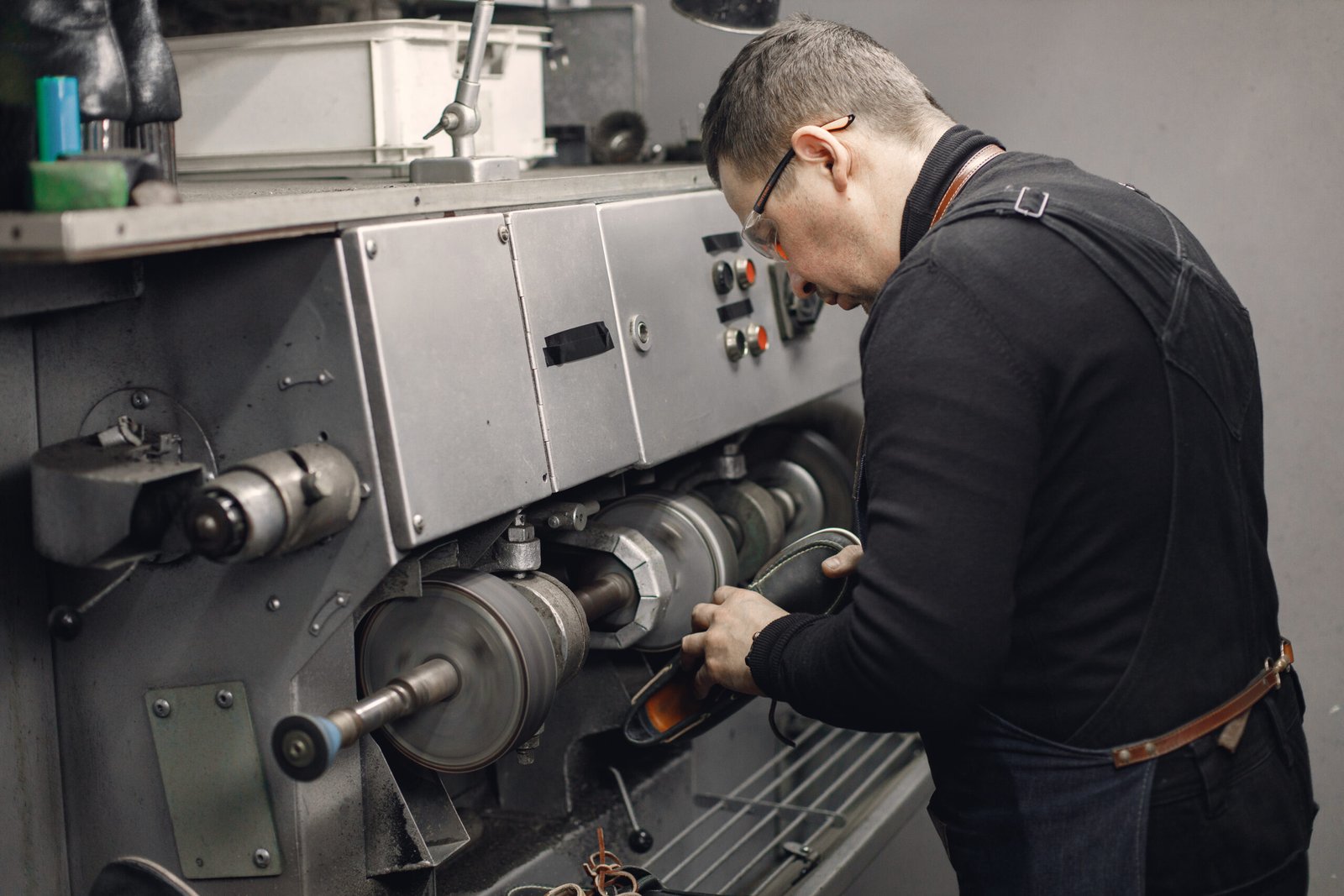
- Robotic part removal and end-of-arm tooling — In-house manufactured robotic end-of-arm tooling ensures consistent, damage-free extraction of large, heavy parts from the mold, protecting both part geometry and surface finish at every cycle
- Trimming and deflashing — Excess material at parting lines is removed through controlled trimming processes appropriate to the part material and geometry
- CNC machining and drilling — Secondary machining operations are performed where dimensional requirements exceed the tolerances achievable through molding alone, or where threaded holes, precision bores, or mating surfaces must be added
- Painting and surface coating — Large part surfaces can be finished with primer and topcoat paint systems, UV-protective coatings, or functional coatings depending on the application environment
- Pad printing and silk-screen printing — Branding, labeling, and instructional graphics are applied directly to molded surfaces as part of the production workflow
- Assembly and custom packaging — Sub-assemblies incorporating hardware, inserts, or mating components are assembled in-house and packaged to customer specification, ready for direct use on the production line or in the distribution channel
This one-stop production capability eliminates the coordination overhead of managing multiple suppliers for different processing steps — a significant operational advantage for procurement teams managing complex supply chains.
Precision Large Tonnage Molding Provider: Quality Assurance at Every Stage
For large plastic components, the cost of a quality failure scales with the part. Scrapping or reworking an oversized structural component is significantly more disruptive and expensive than dealing with a small-part non-conformance. Jiangzhi’s quality management system is designed with this proportionality in mind — applying rigorous inspection protocols at every stage of the large part production process.
Our quality assurance framework for large part orders includes:
- Mold flow simulation before tooling — Every new large part mold design is analyzed using simulation software to predict fill behavior, weld line locations, cooling performance, and potential warpage before a single machining operation begins
- First Article Inspection (FAI) — Initial production samples are fully measured against the customer’s 2D drawing and 3D CAD model using coordinate measuring equipment. Dimensional records are retained for traceability
- In-process dimensional sampling — Parts are sampled at defined intervals throughout each production run to detect process drift before it generates a non-conforming batch
- Visual and cosmetic inspection — Surface quality, sink mark condition, flash, and color consistency are assessed against agreed acceptance criteria before packing
- Lifting and handling protocols — Large parts require dedicated lifting fixtures and handling procedures to prevent distortion or surface damage during post-mold cooling, inspection, and packing. Jiangzhi’s production floor is equipped with appropriate lifting equipment and handling fixtures for oversized components
General dimensional tolerance for large parts at Jiangzhi is ±0.2mm, with tighter tolerances achievable for specific features where tooling and process conditions support it.
Applications: Where Large Part Injection Molding Delivers the Most Value
The industries and applications that benefit most from custom high-capacity molding manufacturer partnerships are those where part size, structural performance, and production volume intersect in ways that make alternative manufacturing processes — such as thermoforming, rotational molding, or fabrication — less economical or less capable.
Jiangzhi produces large injection-molded components across the following sectors:
Automotive — Dashboard assemblies, door trim panels, bumper fascias, underbody protective panels, wheel arch liners, and interior structural components. Automotive large parts demand consistent SPI surface finishes, tight dimensional tolerances for assembly fit, and material compliance with automotive OEM standards.
Consumer Electronics and Appliances — Washing machine outer tubs and rear panels, refrigerator inner liner panels, television rear enclosures, and large monitor housings. These applications require excellent cosmetic surface quality, dimensional stability across temperature cycles, and material compliance with relevant consumer product safety standards.
New Energy and Industrial Equipment — Battery enclosure housings, electrical cabinet panels, protective covers for charging infrastructure, and structural casings for industrial automation systems. Parts in this sector increasingly require flame-retardant (FR) grades and UV-stabilized materials for outdoor deployment.
Construction and Building Materials — Large cable trays, conduit housing systems, building panel components, and structural profiles for modular construction systems.
Heavy Equipment and Infrastructure — Protective equipment panels, large fluid reservoir components, machine covers, and structural brackets for construction and agricultural machinery.
Medical and Laboratory Equipment — Large equipment housings, protective enclosures, and structural frames for diagnostic and laboratory instruments where dimensional precision and material biocompatibility are required.
Why Jiangzhi Is the Right Large Tonnage Contract Molder Manufacturer for Your Project
Choosing a manufacturing partner for large plastic parts is a decision that carries long-term supply chain consequences. Tooling is a capital investment. Production relationships take time to establish. And when a large part fails in the field, the downstream effects are costly and difficult to contain. The right large tonnage contract molder manufacturer brings engineering depth, process discipline, and manufacturing scale to that relationship from day one.
Jiangzhi delivers on all three. Our high-tonnage injection molding machines — ranging from 90 to 1,100 tons — combined with in-house mold fabrication, robotic material handling, and a rigorous multi-stage quality management system give our clients a complete, reliable production solution for large plastic components at any volume.
We respond to all quotation requests within 24 hours, provide DFM analysis with every new project submission, and deliver T1 prototype samples in as little as two weeks for straightforward geometries. Whether your project requires a short prototype run to validate a new design or a high-volume production program supporting continuous replenishment, Jiangzhi has the equipment, team, and process capability to deliver.
Upload your CAD files at swcpu.com or contact our engineering team directly at sales@swcpu.com. We will respond within 12 hours with a detailed quote and technical feedback tailored to your large part project.